Start with the polymer, not the label
ABS, acrylic, polypropylene, polycarbonate, nylon and coated plastics do not respond in the same way. Some are intended for laser marking, some are better suited to a different process, and some can release hazardous or corrosive fumes when heated. “Plastic” on a marketplace listing is not enough information to make a safe process decision.
Ask for the exact material name, any additives or coatings, and the supplier’s laser-processing guidance. Keep the label, technical sheet or safety data with the job record. If the part is salvaged, unidentified or painted, treat the material as unverified until you can establish what it is.
Use a compatibility matrix before you buy
Compare the machine’s documented material list with the part you actually need to mark. The useful questions are specific: Does the manufacturer describe engraving, marking or cutting? Is the guidance for the same laser type? Does it cover the surface finish and color? Is an enclosure or filtered extraction required?
Do not turn a successful mark on one sample into a blanket claim for every part in the same product category. A filled, textured or coated plastic may behave differently from a clear, uncoated sheet. A small swatch test tells you about that batch; it does not replace material identification.
Design for contrast and repeatability
For plastic parts, the visual goal may be a surface color change, a shallow texture or removal of a top coating. Decide which result you need before comparing machines. Contrast, edge sharpness, heat distortion and cleanup matter more than an impressive maximum specification.
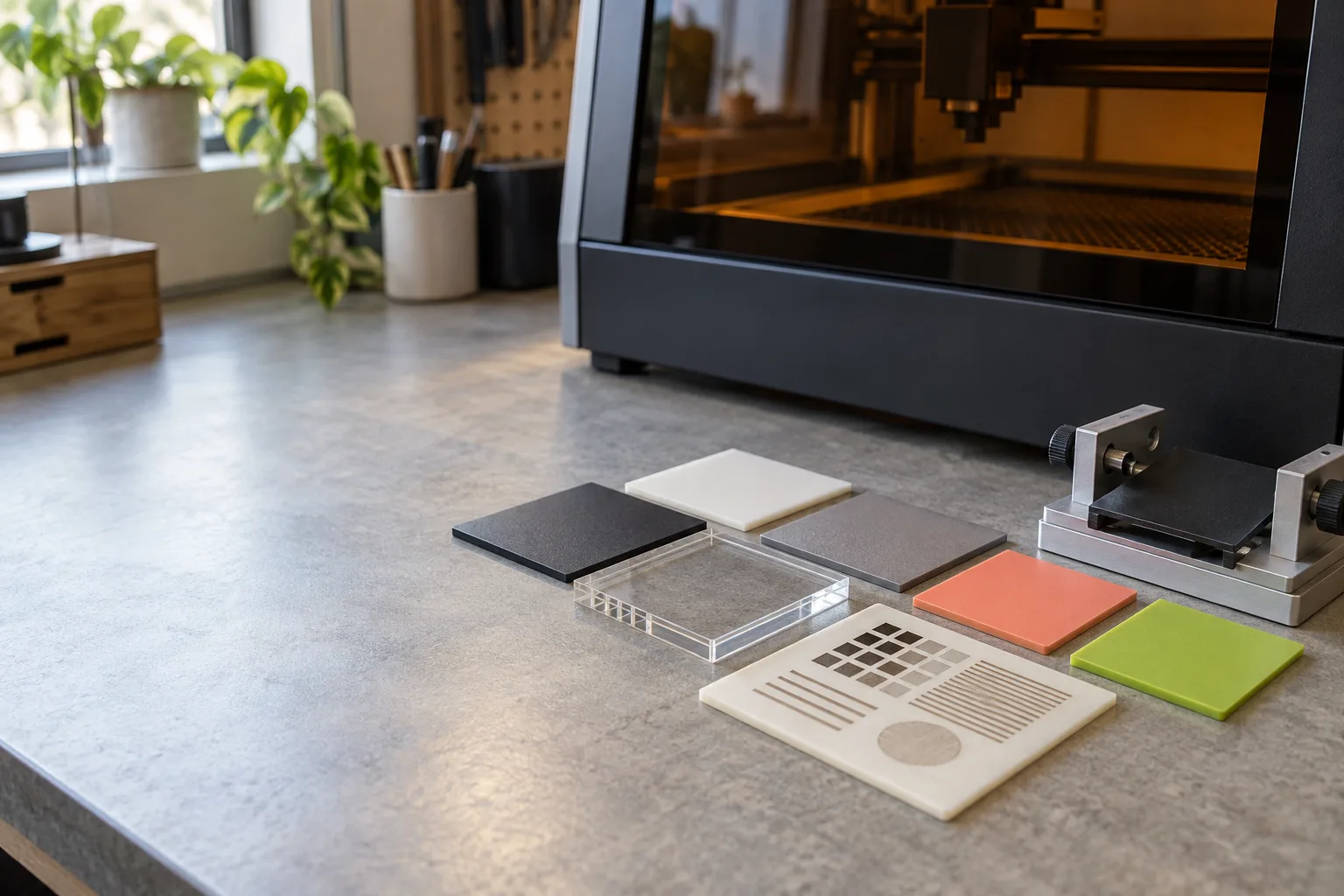
Plan a simple test grid with several conservative settings, one variable at a time. Record the machine, lens or head configuration, focus method, material batch and result. Use a fixture when the part has a curved or slippery surface. If the same part will be marked repeatedly, repeatability and registration are more valuable than a single attractive sample.
Treat extraction as part of the plastic workflow
Plastic fumes are a process-control and safety issue, not a cosmetic nuisance. Use the manufacturer’s enclosure and exhaust guidance, keep the capture path sealed, and make sure the room receives replacement air without creating a draft across the work area. A room air purifier is not automatically a substitute for source capture.
Never laser PVC, vinyl or another chlorine-containing material unless a qualified process and equipment specification explicitly supports it. When the material is uncertain, do not “test a corner” to find out. Move to a verified material or a different marking method.
Plastic decision checklist
| Question | Why it matters | What to record |
|---|---|---|
| What polymer is it? | Different plastics absorb and heat differently. | Polymer name, grade and source. |
| Is the surface coated? | A coating may be the part being marked—or the source of the contrast. | Coating type and finish. |
| Is the mark decorative or functional? | A readable logo is a different job from a durable code. | Required contrast, depth and durability. |
| How will fumes be captured? | Extraction protects the operator and keeps the process consistent. | Enclosure, duct path and filter plan. |
Before you compare machines
- Name the plastic before comparing machine types.
- Check the maker’s material guidance for the same laser category and finish.
- Plan a small, documented test grid and use a fixture for repeat jobs.
- Treat enclosure and source extraction as part of the purchase decision.
Questions worth answering first
Can any laser engraver mark plastic?
No. Plastic is a broad material family, and compatibility depends on the polymer, additives, coating, laser type and process. Use documented material guidance rather than a generic product category.
Is acrylic easy to engrave?
Some acrylic workflows are well established, but the result still depends on the acrylic type, color, thickness, finish and machine guidance. Test the exact stock you plan to use.
What plastic should never be laser engraved?
Do not process PVC, vinyl or an unknown plastic when the composition is uncertain. A qualified material and equipment specification should be the starting point for any exception.