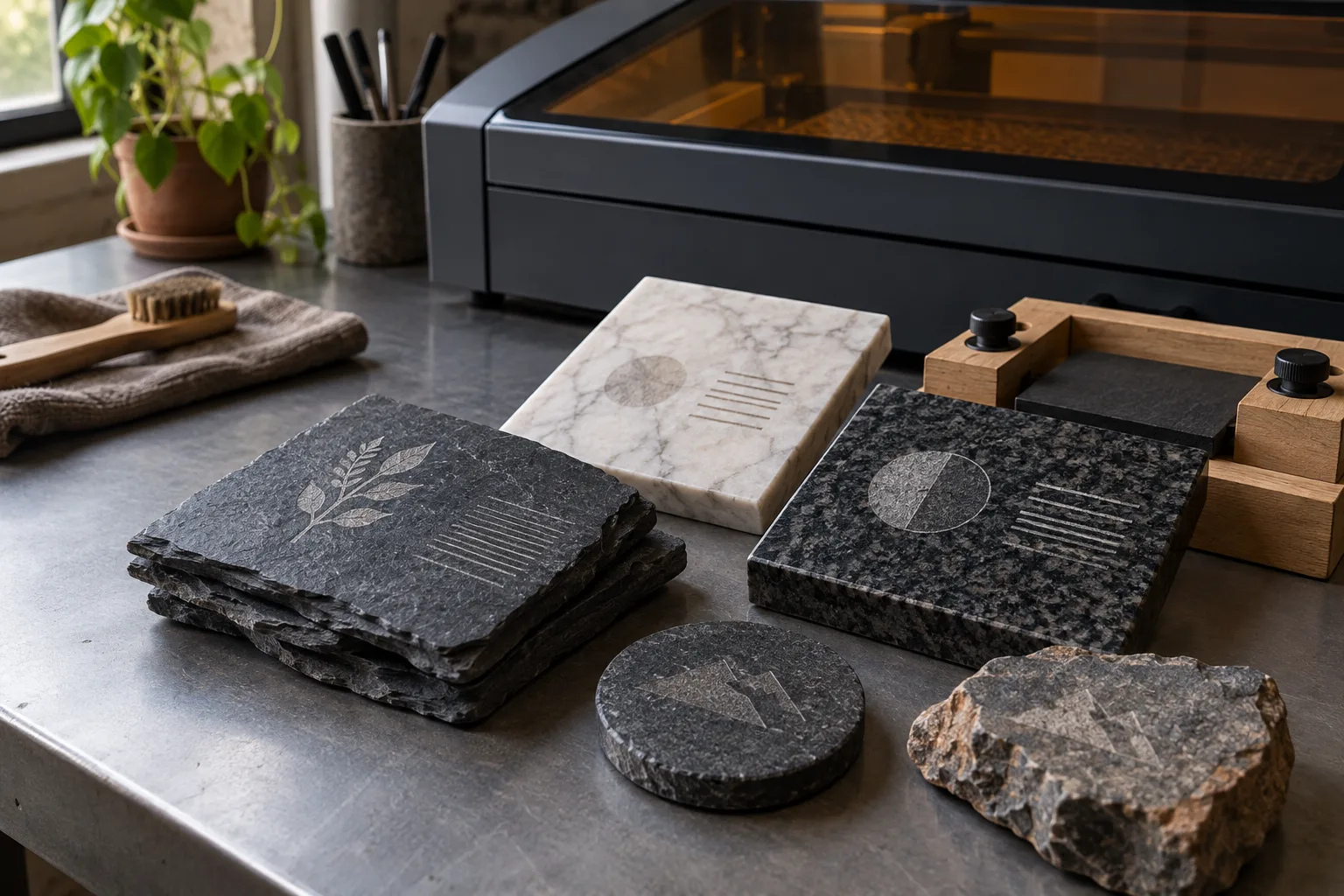
Natural stone is not a uniform sheet
Slate can have layers and a directional grain. Marble and granite vary in color, mineral content and polish. Concrete, ceramic tile and engineered stone may include binders, pigments or sealers that change how the surface reacts. Even two pieces from the same box can produce different contrast.
Record the stone type, finish and supplier. If a sealer, wax or paint has been added, include it in the process notes. A machine recommendation that works on an unsealed sample is not automatically valid for a sealed countertop offcut.
Contrast is a workflow choice
Some stone projects rely on the natural light-dark change from the mark. Others use a paint fill or a second cleanup step to make lettering easier to read. Choose a readable contrast method before comparing equipment, because the machine alone may not create the final appearance.
Run a test panel with the same finish, thickness and orientation as the real job. Look at small type, thin lines, filled areas and the edge of the mark. Photograph the test under the lighting where the finished sign will be read; a mark that looks strong on the bench can disappear in a showroom or outdoors.
Plan for dust, residue and fixturing
Stone work can leave dust and residue around the part, so housekeeping and extraction belong in the workflow. Keep the surface supported, level and easy to remove for cleanup. Avoid a setup where loose grit can enter moving parts or sit under the focus point.
For tiles and small blanks, a simple repeatable stop can matter more than a larger headline work area. For heavy slabs, confirm the table, access and clearance before you plan a production workflow. Use the maker’s instructions for cleaning and avoid assuming that a wet process is compatible with the machine.
Choose the machine around the part
Compare the usable bed dimensions, focus range, enclosure and extraction path with the largest stone piece you expect to handle. Check how the design is aligned and whether the machine can maintain focus over a textured or slightly uneven surface.
If the job is mainly names, logos or small signs, repeatable registration and a clear preview can be more useful than a larger maximum depth claim. If the job requires relief or deep shaping, it may be a different class of process entirely—confirm that the machine is documented for it instead of assuming that “engraving” covers every depth.
Stone engraving decision checklist
| Variable | Why it changes the result | Before purchase |
|---|---|---|
| Stone and finish | Mineral mix, polish and sealers affect contrast. | Keep a same-finish test piece. |
| Mark style | Surface contrast, fill and relief need different workflows. | Define the readable final appearance. |
| Part size and weight | The bed and loading path must support the real blank. | Measure the largest job, not the sample. |
| Cleanup plan | Dust and residue affect safety and machine care. | Document extraction and housekeeping. |
Before you compare machines
- Test the exact stone, finish and orientation you plan to sell or install.
- Choose the contrast and fill workflow before judging the machine result.
- Measure part size, weight and loading access—not only the advertised bed size.
- Keep dust control and cleanup outside the moving parts and optical path.
Questions worth answering first
Can a laser engraver mark granite and marble?
Some workflows can mark particular stone surfaces, but the result depends on the stone, polish, coating, laser category and desired contrast. Test a matching offcut and follow the machine maker’s guidance.
Do I need a special laser for slate?
Slate is a material with its own texture and layer variation; the useful question is whether the specific machine and process are documented for the slate finish you have. Do not choose from the word ‘stone’ alone.
How do I make stone engraving more visible?
A controlled test can compare natural contrast with a compatible fill or finishing step. Judge the result under the final lighting and follow the material and finish manufacturer’s instructions.