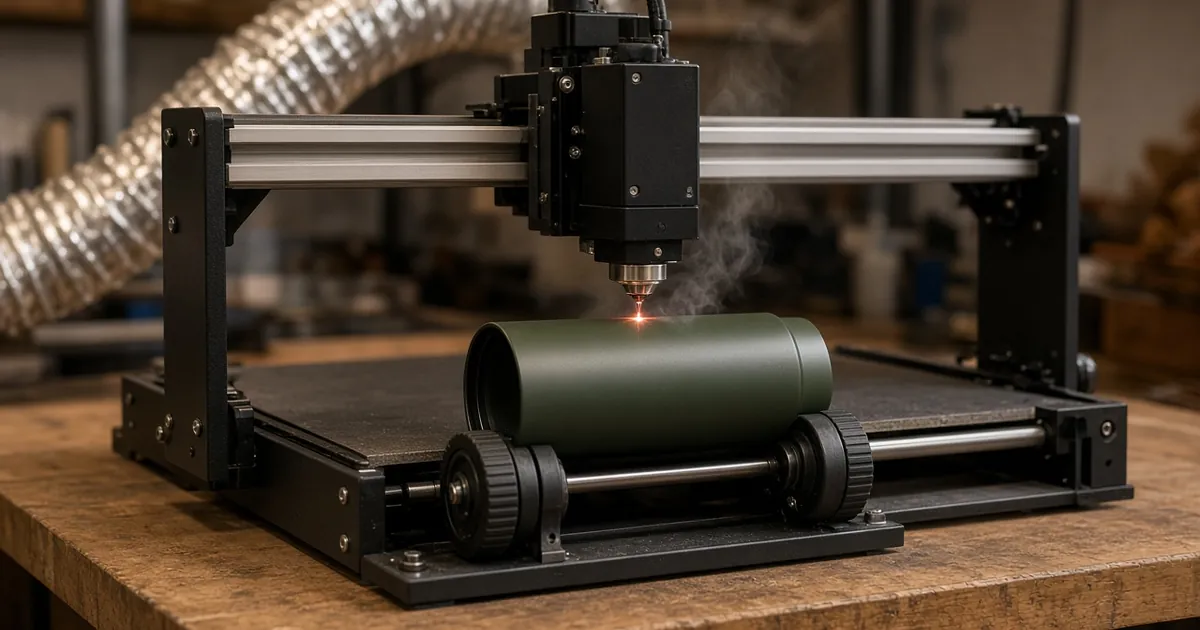
Quick picks: laser engravers and rotaries for tumblers
These are machine types and spec targets to shop for, not specific models. Listings change often, so read the exact output power, rotary compatibility and included parts on each listing. The engraver button opens a search for rotary-ready engravers. The chuck rotary button opens one specific rotary, the ACMER M4.
| Pick | Best for | Tumbler surfaces | Rotary to pair | Main trade-off | Shop |
|---|---|---|---|---|---|
| 10–20W diode + roller rotary | First tumbler setup, powder-coated cups | Powder coat, many painted finishes | Roller, adjustable for taper | Weak on bare stainless | Check price |
| Higher-output diode with air assist | Small batches of coated tumblers | Powder coat, painted | Roller with long rollers or tailstock support | More smoke, needs real extraction | Same engraver search |
| 20–30W fiber (galvo) + rotary | Bare stainless and coated metal, repeat orders | Bare stainless, powder coat, anodized | Chuck or galvo-specific roller | Higher cost, galvo rotary workflow | Same search, filter fiber |
| Budget diode kit with included rotary | Testing the tumbler market cheaply | Powder coat | Bundled roller (check range) | Bundled rotary may not fit 30–40 oz cups | Same engraver search |
| Add-on roller rotary | Straight and mildly tapered tumblers | Any (holds the cup) | — | Handles and steep taper can slip | Not linked |
| Add-on chuck rotary: ACMER M4 (4–64 mm) | Handled tumblers, heavy or tapered cups | Any (holds the cup) | — | Slower to load per cup | Check price |
How we chose these picks
We didn’t run a lab test, and we don’t rank brands. The picks follow how tumbler work actually goes wrong in small shops:
- Surface first. The coating or bare metal decides which laser source can mark it. Wattage comes second.
- Rotary fit. A machine that marks a flat sample can still fail on a 40 oz tapered tumbler because the rotary can’t hold it level.
- Clearance and connection. The tumbler plus the rotary has to fit under the laser head, and the controller has to drive the rotary.
- Workshop reality. Tumbler coatings make smoke. Extraction belongs in the budget from day one.
If you’re comparing headline wattage between listings, read what wattage does and doesn’t tell you first.
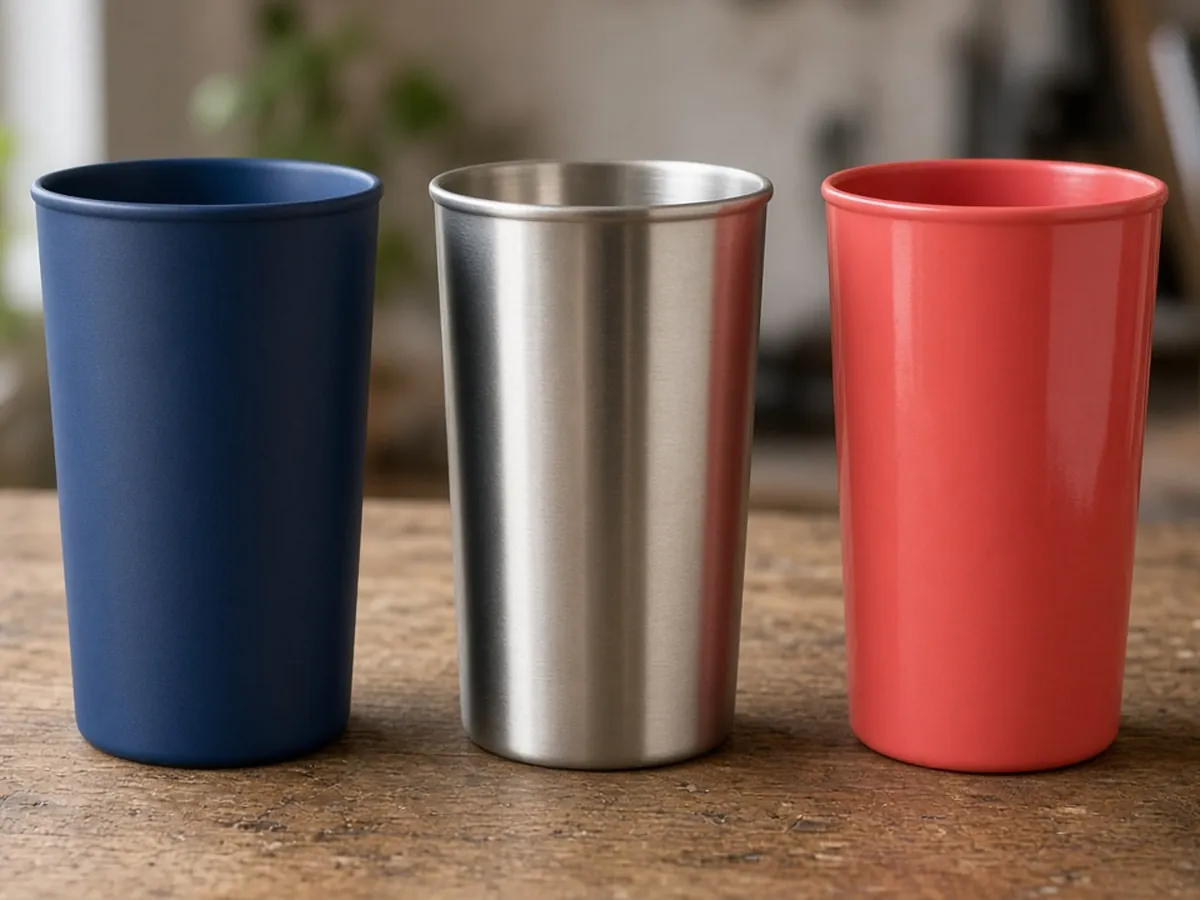
Choose the laser source by tumbler surface
| Tumbler surface | Diode | Fiber | What to check |
|---|---|---|---|
| Powder-coated stainless | Common choice; removes coating to bare steel | Works; can also brighten the steel underneath | Coating type, maker documentation, extraction |
| Bare stainless (brushed or polished) | Limited; often needs a marking compound | Standard choice for permanent marks | Focus depth across the curve, galvo rotary support |
| Painted or spray-coated | Often works, results vary with the paint | Works | What the paint actually is (ask the seller) |
| Anodized aluminum | Sometimes, depends on the maker | Common choice | Anodized vs painted aluminum |
| Epoxy, glitter or vinyl-wrapped | Proceed with caution | Proceed with caution | Fumes; never laser PVC vinyl |
| Plastic or glass tumblers | Material-dependent | Not typical | Plastic type; glass usually suits CO2 |
Powder-coated tumblers: the diode sweet spot
Most blank tumblers sold for personalizing are powder coated. The laser removes the coating and exposes the steel, so contrast comes from the color difference, not from marking the metal. A diode laser in the 10–20W optical class handles this job for most hobby and Etsy work. More power mainly buys speed. A 1064 nm fiber laser also removes powder coat and can leave the steel underneath brighter, which some buyers prefer. CO2 lasers can do it too, but they’re outside the scope of this page.
Bare stainless: plan on fiber
If customers want a name on a bare brushed or polished tumbler, a diode laser alone is a weak fit. Expect faint results or the extra step of a marking compound. A fiber laser is the usual tool for permanent marks on stainless, including dark annealed marks. The stainless steel guide and the fiber laser checklist go deeper on that choice.
Painted, epoxy and specialty finishes
Painted tumblers often mark well, but “painted” covers many chemistries. Ask the blank supplier what the coating is. Glitter epoxy, vinyl wraps and printed films need extra care: some release harmful fumes, and anything containing PVC shouldn’t go under a laser at all. If you sell custom finishes, test them before you promise anything to a customer.
The picks in detail
1. 10–20W diode laser + roller rotary
Best for: your first tumbler setup, mostly powder-coated 20–30 oz cups.
Look for: stated optical output power (not just electrical input), a listing that names rotary support or a rotary port, enough frame height for a tumbler on rollers (or an included riser kit), air assist, and support in the engraving software you plan to use.
Skip it if: most of your orders are bare stainless.
2. Higher-output diode with air assist
Best for: sellers who already know powder-coated tumblers sell and want shorter job times.
Look for: the same checks as pick 1, plus built-in air assist and a frame or enclosure that can take a rotary. Faster coating removal also means more smoke per minute, so pair it with a proper exhaust system and an enclosure.
Skip it if: you only engrave a few cups a month. A mid-range diode will do.
3. 20–30W fiber laser (galvo) + rotary
Best for: bare stainless, mixed metal drinkware and repeat orders where speed and permanence matter.
Look for: a rotary sold for galvo fiber machines (not a diode rotary), software that supports rotary or segmented cylinder marking, a work-height range that fits your tallest tumbler, and a clear statement of which lens or field size ships with the machine. Galvo heads mark one section at a time and turn the cup between sections. Check that the listing explains how its rotary does this.
Skip it if: your work is only powder-coated cups and the budget is tight.
Shopping tip: in the engraver search, filter for fiber and confirm a rotary option compatible with galvo heads.
4. Budget diode kit with included rotary
Best for: testing whether tumbler orders are worth a bigger investment.
Look for: the bundled rotary’s diameter range and maximum length compared with your actual cups, especially 30 and 40 oz sizes. Also check whether risers are included and whether the controller has a dedicated rotary port.
Skip it if: you already know you’ll sell handled tumblers. Bundled roller rotaries rarely handle them well.
Rotary matching: roller vs chuck for tumblers
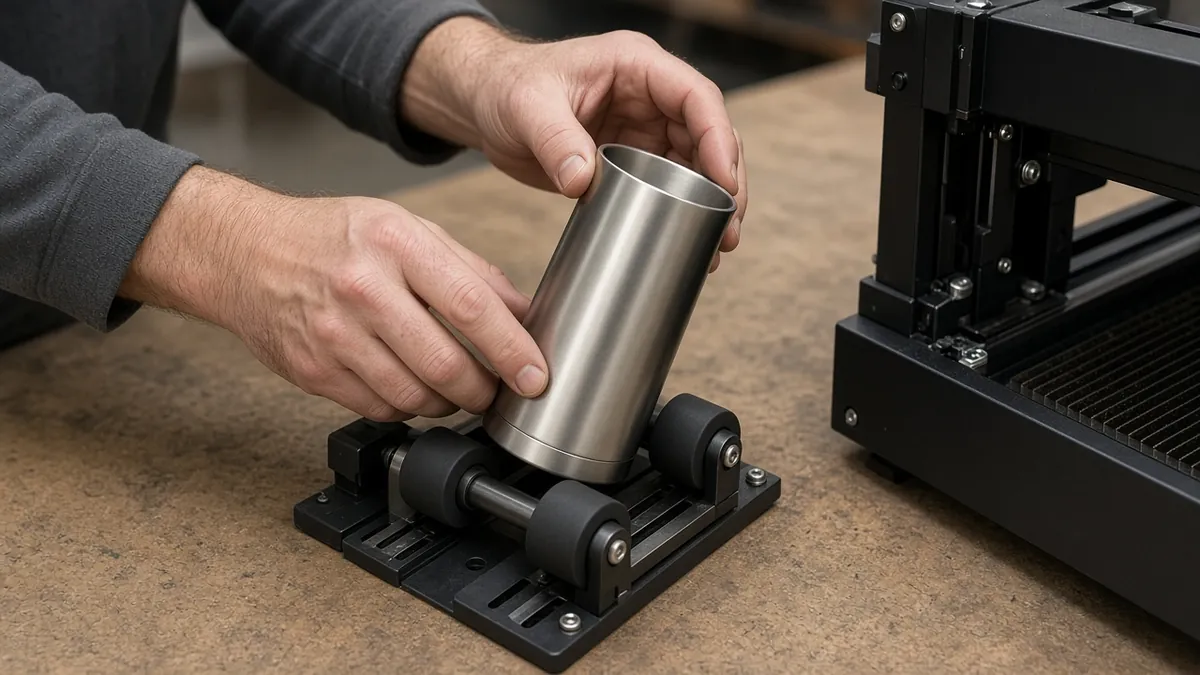
The rotary is half the purchase. The cup engraver guide explains how both designs work. For tumblers specifically, here’s what decides the pick:
| Tumbler type | Better fit | Why |
|---|---|---|
| Straight-walled 20–30 oz | Roller | Fast loading, stable on two rollers |
| Tapered 30–40 oz without handle | Roller with height adjustment, or chuck | The engraving surface must sit level under the head |
| Handled 40 oz travel tumbler | Chuck | Rollers can’t turn a cup with a handle in the way |
| Heavy or long tumblers | Chuck with tailstock, or long-roller rotary | Prevents slipping and wobble |
5. Add-on roller rotary
Look for: a stated minimum and maximum diameter that brackets your cups, adjustable roller spacing, a tilt or height adjustment for tapered tumblers, rubberized rollers, and an overall height that still leaves focus room under your laser head.
Shopping tip: compare the diameter range and roller length against your largest tumbler. We don’t link a specific roller rotary yet.
6. Add-on chuck rotary
Look for: a jaw range that grips your tumbler rims or bases without marking them, a tailstock or support for long cups, protective jaw pads, and a mount height compatible with your machine (or risers).
Our pick: the ACMER M4 chuck rotary, listed for 4–64 mm. Measure the part of your tumbler the jaws will grip (rim or base) and compare it with that range. Then confirm on the listing that it works with your engraver.
Compatibility checks before you order a rotary
- Connector and driver. Many diode controllers have a rotary or Y-axis port. Confirm the plug type and whether you swap a cable or use a dedicated port.
- Software. Your software needs a rotary mode that matches the rotary type (roller or chuck).
- Height. Add up the rotary height, the tumbler’s diameter and the head’s focus distance. Open-frame machines often need risers.
- Machine type. Diode rotaries and galvo fiber rotaries aren’t interchangeable by default.
Buying checklist
| Check | Why it matters |
|---|---|
| Tumbler surface named | Decides diode vs fiber |
| Optical output stated | Compares machines honestly |
| Rotary support documented | Avoids a machine that can’t drive one |
| Diameter range covers 20–40 oz cups | Avoids slipping or not fitting |
| Handle plan (chuck) | Rollers can’t turn handled cups |
| Height clearance or risers | The cup must fit under the head |
| Extraction and enclosure budgeted | Coating smoke needs removal |
| Eye protection for the wavelength | Safety glasses must match the laser |
Once the hardware arrives, use a test file and the tumbler settings workflow before you sell your first cup. Keep the rotary and optics clean with routine maintenance.
Laser engraver for tumblers FAQ
What is the best laser engraver for tumblers?
For powder-coated tumblers, a 10–20W optical diode laser with a compatible roller rotary covers most small-shop work. For bare stainless or high-volume orders, a 20–30W fiber laser with a galvo-compatible rotary is the stronger fit.
Can a diode laser engrave stainless steel tumblers?
A diode laser engraves powder-coated stainless tumblers well because it removes the coating. On bare stainless, results are limited and often need a marking compound. A fiber laser is the usual choice for permanent bare-metal marks.
Do I need a rotary for a laser engraver to do tumblers?
For full wraps or designs larger than a small flat patch, yes. The rotary turns the tumbler so the surface stays at focus. Without one, the curve drops out of focus quickly.
Roller or chuck rotary for 40 oz tumblers?
Use a chuck rotary for handled 40 oz tumblers. Rollers can’t turn a cup with a handle. A roller rotary with height adjustment can work for 40 oz tumblers without a handle.
Will any rotary work with my laser engraver?
No. Check the connector, the controller’s rotary port, software support and the height clearance. Diode and galvo fiber rotaries are usually different products.
Is a CO2 laser good for tumblers?
CO2 lasers can remove powder coat, and they’re the usual choice for glass. They aren’t covered here because most tumbler buyers compare diode and fiber machines.